Tuesday, March 26, 2013

Things I'm learning in Uganda #4 - Jesus is not an American


On Palm Sunday, we celebrated the triumphal entry of Jesus as He rode into Jerusalem, where He was welcomed with eager expectation and shouts of "Hosanna" and "Blessed is He who comes in the name of the Lord!"  Yet, merely 5 days after such an enthusiastic welcome, the very same people were yelling "Crucify Him!" instead of "Hosanna!"  What happened in those 5 days to change the reaction of the people so drastically?


A full answer is too long and involved for a short blog post, but one reason is because Jesus failed to fulfill the people’s expectations of what they wanted Him to be.  Many Jews wanted Jesus to overthrow the Roman government and become an actual King.  When Jesus not only failed to fulfill their expectations but also taught things that went contrary to their image of what a Redeemer should be, their eager expectation turned to bitter disappointment and outrage. 

This is relevant for us because we often do the same thing with Jesus today – we remake Him to fit in with our own expectations, and expect that he will bless and support our lifestyles and agendas.  We recreate Him in our own image, and often in our own cultural image. 

Source:
http://southern-orthodoxy.blogspot.com/2007/09/
only-in-america-fish-chases-dollar.html
One thing I have learned from living in another country is that Jesus is not an American.  Many missionaries have come to Uganda and other parts of the world preaching about a Jesus and a Christianity that is a reflection of American cultural values.  Jesus, and Christianity for that matter, transcends our cultural understandings and limitations.  One reason I chose to do graduate studies in theology in Kenya instead of in the US was to try to view Christianity through a different cultural lens, and to separate what parts of my faith were a reflection of my American culture more than a reflection of Biblical Christianity. 


For example, our American culture is highly individualistic.  In many churches, individual expressions of faith – personal prayer, Bible reading, a personal relationship with God, and individual moral righteousness – are held in high priority, oftentimes overlooking or completely ignoring the strong communal nature of the Kingdom of God as well as structural and communal sins, like oppression and injustice.  Living in communal cultures has given me a better understanding that Christianity is not just supposed to be an individual pursuit of righteousness but a countercultural community of faith.

Source:
In addition, our materialistic and consumerist culture tends to view Jesus as championing the accumulation of wealth and possessions.  An extreme expression of that is the prosperity gospel, which was “born” in the US and completely ignores Jesus’ difficult teachings on money and concern for the poor.  I think Jesus would have some hard words for our current economic systems that often place profit far above concern for people and the environment, and which lead to gross inequalities in the distribution of wealth in the US and in the world.  Living in East Africa has challenged me to reflect on how the materialism and consumerism in the West can sometimes lead to oppression, environmental degradation, and poverty in other parts of the world.


So this Holy Week, I’m reflecting on what Jesus would have to say to us if He were to come back today.  I wonder if I would have the humility to really hear His words and allow them to challenge my cultural views and lifestyle, or if I would be among those yelling “Crucify Him!”      

Tuesday, March 19, 2013

Planting season!

    The rains have arrived in Kampala, which means it's planting season!  (It also means a nice break from the very hot, dry weather we've had since the beginning of the year)

One of our papaya trees
    As I mentioned in a previous post, I am determined to plant something that will actually make it to our dinner table this time!  So a week and half ago Natalie and I planted black beans, red beans, broccoli, cilantro, plums, and carrots.  I decided to plant a wide variety so that at least one of them should produce a harvest.  We also currently have papayas, maize, sugar cane, sweet potatoes, arrowroots, onions, bananas, and a few young avocado trees growing in the garden.


 This weekend it had been dry for about 2 days so we went out to water the things we had planted..

I love Natalie's "gardening" outfit!

 Nathan wanted to help and just ended up getting wet!


Of all the things we planted, the beans are doing the best and are growing fast, which is encouraging!
Our beans are growing fast..only a week after planting


Friday, March 15, 2013

Ik Awareness Day


On Monday, Muigai boarded a tiny 8 seater plane (through Missionary Aviation Fellowship) to travel from Kampala to Kotido, a town in the Northern part of Uganda.  The majority of people who live in Kotido and the surrounding area are called the Karamajong.  After a very bumpy ride, he safely arrived in Kotido and was greeted by our local partner, Romano.


Romano, center, addresses a group of Ik students

Romano is a very influential Karamajong man who has worked tirelessly to bring peace to his community.  The Karamajong consist of 5 subgroups who have engaged in conflict and cattle raiding over the past several years.   In the past two years, there has been a significant reduction in cattle raiding and an increasing sense of peace and security in the region.

Romano is also the person who started a sponsorship program for Ik children, which MCC has supported for the past several years. 


After arrival on Monday, Muigai was able to witness a traditional disciplinary meeting in one of the communities.  Several young men had been caught stealing cattle from another group and were being disciplined according to their tradition.  Among other things, the young men had to buy beer for everyone and offer goats to be slaughtered and eaten. 

The men of the community gather with long sticks for the meeting
On Tuesday, there was a ceremony for Ik Awareness Day, which was the main focus of Muigai’s visit.  This program was in a town called Kaabong, about an hour north of Kotido.  Every year, MCC sponsors an event to raise awareness about this marginalized group.  The day began with a march through the town, and then a meeting with several speeches.

The Ik students march through the town
Muigai enjoyed getting a chance to catch up with the Ik students we had met in Kampala, but was disappointed to learn that most of the children who had taken their senior 6 exams had not done well.  The results of this exam is the sole determinant in whether the students will get a place in a public University.  Although several of our students are bright and had performed very well in school, the schools in that region struggle with a lack of resources which makes it difficult for them to compete with students in schools in other parts of Uganda which have more resources.  Many of the students were very discouraged and we are not sure what their next step will be.

Tuesday, March 12, 2013

Things I'm learning in Uganda #3 - you can fit a lot on a bike!

    One of the most common means of transportation in Uganda is a "boda boda", or a motorcycle.  These are used not just as motorcycle taxis to carry people, but to transport all kinds of things from chickens to furniture to meat (we saw a boda the other day loaded with what looked like an entire cow worth of meat - sadly I didn't grab my camera fast enough).  Regular bicycles are also often used to transport materials as well, and it is amazing to see how much people can fit on a bike.

    On a serious note, it is incredible to see the level of hard work and creativity of many people here in Kampala.  Unemployment rates are very high, and many people need to find ways to support their family outside of typical employment. 

    On a lighter note, check out these pictures of things transported by bikes and bodas - some taken by me, others I got from the internet:

A bike loaded with tires - we saw this bike on our way to work.  Kampala is very hilly and daytime temps get to 90+ degrees - pedaling on those hills in that heat with a load like this is pretty incredible!

Muigai took this picture last year - he is carrying a tall medal door

I actually saw a boda loaded with even more chicken than this recently (yes those are live chickens!) - I was driving and nobody else was in the car so I couldn't get the picture Source: http://www.tumblr.com/tagged/boda%20boda

This picture I got from the internet, and I've never seen a boda quite this fully loaded - but I have seen some carrying 3 adults and others carrying 3 or 4 children.  Source: http://bodabodayoga.com/?page_id=58


Friday, March 8, 2013

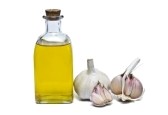
Things I'm learning in Uganda #2 - Ear infections can be healed with garlic and olive oil

So this isn't really something that I am learning from Ugandan culture, but it's still something pretty amazing I learned this past week so I decided to write a post about it....

On Wednesday afternoon, we were headed to a friend's house when Natalie started complaining about her ear hurting.  About 5 minutes after arriving, she started crying and was just laying on my lap crying on and off for about 20 minutes.  I knew it was serious because she didn't have any interest in eating the chocolate brownies that my friend had offered her!  She seemed to be in a lot of pain, so we left and passed by the doctor on the way home to confirm if it was an ear infection or something else. 

The Dr said it was in fact a bad ear infection, and gave her a "strong" antibiotic (her words), an antihistamine, and some painkillers.   


I don't like giving my kids any medicine unless it's really necessary, and I especially try to avoid antibiotics - my friend had mentioned that she heard ear infections can be treated with garlic and olive oil, so I figured it was worth a shot.  I crushed three cloves of garlic and heated them in about 1/4 cup of olive oil until it started bubbling.  I left it to cool until it was just slightly warm then used a medicine dropper to put a few drops in her ear.  I massaged her earlobe to help the oil get in and to help relieve the pressure.

To my amazement, Natalie immediately said, "Mommy, it doesn't hurt anymore!"  Within seconds she seemed back to her normal herself and skipped to the table to eat her dinner (she had said she didn't want to eat and had been laying on the couch moaning).  I gave her a few more drops before bed and she hasn't said a word about her ear since! 

Natalie helping Maureen cut her cake at team mtg
After doing some reading, I discovered that garlic has natural anti-inflammatory and antibiotic properties, and apparently there are many people who use it as treatment to get fast relief from ear infections without using antibiotics or painkillers.

In other news, yesterday and today we had our MCC Uganda quarterly team meeting.  This is when all our Ugandan staff and all of our international service workers come together in Kampala for two days of team building.  Thursday we had everyone at our house for some updates, discussions, and lunch, and then today we went bowling together and then out to Lotus Mexicana, a Mexican restaurant.  It was a lot of fun to have the whole team together and I feel encouraged to be working with such great people! 


Nathan was so excited about all the big, colorful bowling balls!
Waiting for her food on the swing at Lotus Mexicana
Some of our team members at the bowling alley


Tuesday, March 5, 2013

Chicks!


The biggest excitement at our house these days is the arrival of several baby chicks.  As of this morning, we had 13 baby chicks in our chicken house and about 20 eggs left that we are hopeful will hatch. The eggs started hatching on Sunday and it has been a lot of fun for Natalie and I to check the chicken house several times to day to see how many new chicks have been hatched. 


A few months after we arrived in Uganda, Muigai worked with two other guys to build a chicken house in the corner of our compound.   We got our first two chickens when we visited Stella Matutina in Northern Uganda, then Muigai picked up a few more when traveling back from Western Uganda, and one of our partners brought us several additional chickens.  


We currently have 7 big chickens – three roosters, three hens, and one young chicken (we had hatched ten chicks in January, but a disease killed all but one of them – hopefully we will have better luck this time!)  The main reason we got chickens is for the eggs – we love eggs (Nathan can eat two eggs by himself!) and the fresh eggs from the chickens are amazing. 


I love this picture of a newly hatched chick peeking out from under his mama

Friday, March 1, 2013

Things I'm learning in Uganda #1 - Fresh, organic food is best and it's not hard to grow your own


                In light of my last post where I mentioned having the humility to be able to learn from other cultures, I thought it would be fun to write a few posts about things I’m learning in Uganda….

Our garden from last season
              First, I’m learning that fresh, organic, local foods are best and it’s not hard to grow your own.  I know Muigai is going to laugh when he reads this title because he recently pointed out that I have yet to eat anything that I have personally planted (in my defense, I did help with the weeding and harvesting of our sukumas, beans, tomatoes, and maize last year.  And I did have cilantro and basil plants in the US that I harvested once or twice before they died).


            I love the idea of growing as much of my own food as I can, and some days I have grandiose visions of turning our 1/3 acre compound into something like this:


                But I’m still working on the basics for now.  My first attempt ever at gardening was an abysmal failure.  When I was a student at Nairobi Evangelical Graduate School in Nairobi, Kenya, the school had small garden plots for the students.  A colleague convinced me that in Kenya, land = wealth and there was no way I could turn down an offer of free land, regardless how small. 

                Then the semester started, work piled up, and my small plot lay fallow for several months (there is some Biblical value in letting land lay fallow, right?).  Finally, I grabbed a friend from church who had gardening knowledge and we spent several hours tilling the plot (it had been overrun with grass and weeds) and planting some sukuma, spinach, and onion seedlings.  Unfortunately, that night there was torrential rain and almost all my seedlings were washed away.  My final harvest was one sukuma leaf.  Not one meal or one bunch of sukuma, but a single leaf!  Sad. 

Some of our chickens with the chicken house in the background
Then, while in Kenya in December, I found broccoli seeds.  I love broccoli and it is hard to find and expensive here, so I was thrilled.  Even though Jan/Feb is the hottest time of the year, I was too excited to wait for planting season and decided to plant a few of the seeds in a pot.  I figured I could keep them watered and out of constant direct sunlight and they would be ok.  Well I put the pot in the back of the house where I forgot about it several days (out of sight, out of mind!) and then we had a huge rainstorm that flooded the pot and now my broccoli is just a mess of water, dirt, and some green algae growing on top…at least something is growing there!

An integrated organic farm we visited in Masaka
  But gardening is one skill that I am determined to learn while I am in Uganda, and there couldn’t be a better place for me to learn.  Kampala is an incredibly green city and the land is some of the most fertile land in the world.  The fruits are vegetables here are unbelievable.  Ugandan pineapples are amazingly sweet, and papayas grow as big as watermelons.  Most produce is sold in markets and eaten within a week of being harvested.  Because the land is so fertile, many farmers rely on traditional methods of farming which means many fruits and vegetables are organic.  Genetically modified foods are currently banned in Uganda (and hopefully will stay that way!)
A sack garden for people who don't have much land

I read in a recent article that 40% of the food eaten in Kampala is grown within in the city.  Many Ugandans who have even a small compound are growing something, and those without land even grow vegetables in sacks or tires.  Most children here grow up knowing the basics of growing food and keeping animals, something that I think is lacking in our American educational system. 


So the rainy season is about to start which means it’s time to plant again.  This season I am determined to keep learning and improve my gardening skills, and hopefully in a few months I’ll have some pictures of my successful attempts at growing my own food.